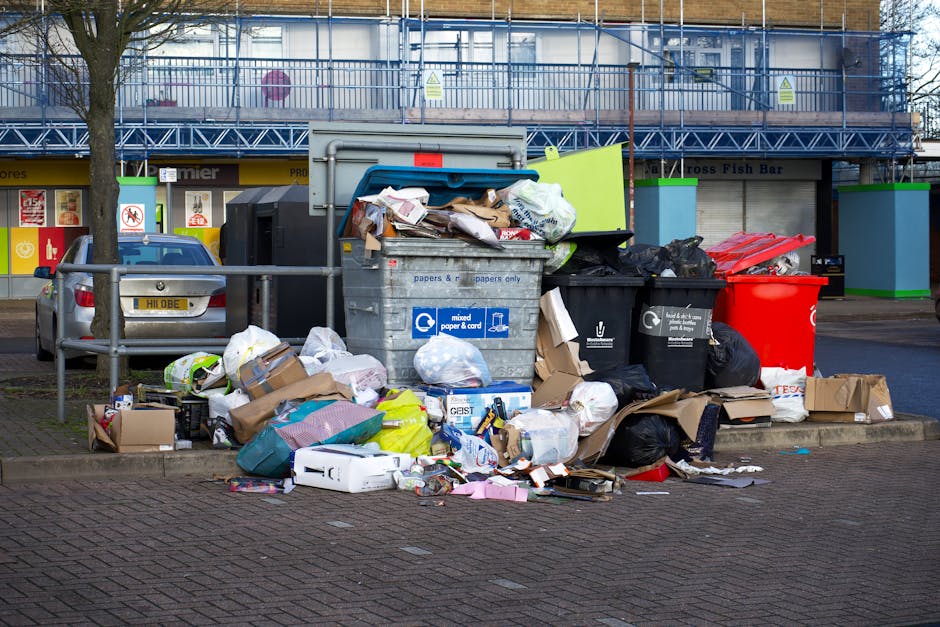
Avoid hidden rubbish removal fees in Surbiton what to know
If you are trying to clear out a loft, garden, garage, or a pile of builders' debris, the last thing you want is a quote that looks fair at first and then quietly grows teeth. That is exactly why people search for Avoid hidden rubbish removal fees in Surbiton what to know. The price should make sense, the collection should be straightforward, and the final bill should not feel like a small betrayal. In Surbiton, where homes can range from compact flats to larger family properties, the details really matter: access, load size, waste type, parking, and disposal all affect the cost. This guide walks you through what to check, what questions to ask, and how to keep control of your budget without making the process a faff.
If you want to compare service information before you book, it can also help to review the provider's pricing and quotes page, along with practical pages like waste removal and recycling and sustainability.
Table of Contents
- Why hidden rubbish removal fees matter in Surbiton
- How rubbish removal pricing usually works
- Key benefits of getting the price right up front
- Who this is for and when it makes sense
- Step-by-step guidance to avoid surprise charges
- Expert tips for better results
- Common mistakes to avoid
- Tools, resources and recommendations
- Law, compliance and best practice
- Options and comparison table
- Case study or real-world example
- Practical checklist
- Conclusion
- Frequently asked questions
Why hidden rubbish removal fees in Surbiton matter
Hidden fees are not just annoying. They can turn a simple clearance into a budget problem. A quote that seems competitive may exclude labour, VAT, parking, congestion-related costs, stairs, waiting time, heavy items, or special disposal charges. That is how people end up paying more than expected for what looked like a tidy, one-off job.
In practical terms, the risk is highest when the job is awkward. A flat on an upper floor, a house with a narrow side passage, a garden with poor access, or a loft packed with awkward items can all change the time and effort involved. None of that is unusual in Surbiton. It is just life, really. But it means you need pricing that is clear before anyone lifts a sack.
There is also the trust factor. When a company explains its pricing plainly, you usually get a better sense of how it works on the day. That matters more than people think. You are not just paying for muscle and a van; you are paying for judgement, safe handling, lawful disposal, and a process that does not leave you guessing.
Key point: a transparent quote is not only about saving money. It is about avoiding awkward conversations at the kerbside when the job is already half done.
How hidden rubbish removal fees usually happen
Most surprise charges come from one of a few places. Sometimes the quote is based on a rough estimate and the waste looks bigger in person. Sometimes the firm gives a headline price but the extras sit in small print. And sometimes the customer and the operator simply have different ideas about what the job includes.
Here is the usual flow. You describe the waste. The company gives a ballpark figure or a load-based estimate. On arrival, they inspect the material, confirm volume, and decide whether the job matches the original description. If it does, the price should stay where it was. If it does not, there may be a revised charge. That part is not automatically unfair. The problem is when the trigger points were never explained properly.
To be fair, some collections genuinely are harder than they sound. A few broken wardrobes at ground level are one thing; a full garage clearance with access via a back lane is another. The point is not to avoid extra charges altogether. The point is to make sure every likely charge is visible before the van turns up.
If you are booking a more specific service, it can help to check whether the provider has a dedicated page for that work, such as garage clearance, loft clearance, or garden clearance. Specific pages often give you a better feel for what the job is likely to involve.
Typical fee triggers to watch for
- Extra weight or volume beyond the quoted load
- Stairs, long carries, or limited access
- Heavy or awkward items that need two-person handling
- Waste that needs separate sorting or specialist disposal
- Waiting time if the site is not ready
- Parking issues, where applicable
- Late changes to the list of items
- Charges linked to materials that require special treatment
Key benefits and practical advantages
Getting the price right from the start saves more than money. It saves time, stress, and the slightly grim feeling that you have been nudged into paying for something you did not really agree to. That matters whether you are clearing out one sofa or dealing with a full property.
The biggest benefit is control. You know what is included, what is not, and what would trigger a change. That lets you compare services fairly. A lower quote that excludes half the job is not a bargain; it is a trap with better branding.
There is also a practical benefit in planning. When costs are transparent, you can decide whether to split the work into stages, combine it with a broader home clearance, or book a separate house clearance where the whole property needs clearing. That choice can make a real difference to efficiency.
Other advantages include:
- Cleaner budgeting for moving, renovation, or tenancy end dates
- Less back-and-forth with the provider
- Better comparison between quotes
- Fewer disputes after collection
- More confidence that waste will be handled properly
Expert summary: the best rubbish removal quote is not the cheapest one on paper. It is the one that clearly explains how the final price is built, so you can say yes with confidence.
Who this is for and when it makes sense
This advice is for anyone booking waste clearance in Surbiton, but it is especially useful if your job has a few moving parts. That might be a flat clearance with stair access, a garage packed with mixed junk, a home renovation with builders' waste, or an office refresh with desks, chairs, and boxes stacked in a corner somewhere.
You will find it particularly relevant if you are:
- Moving house and trying to avoid last-minute costs
- Clearing a rental property before handover
- Preparing a loft, garage, or shed for renovation
- Getting rid of bulky furniture
- Managing ongoing waste for a business or landlord
- Comparing several quotes and trying to understand the difference
It also makes sense if you have already had one bad experience. Let's face it, once you have seen a quote balloon by the end of the day, you become a bit sharper the next time round. That is not cynicism. That is learning.
For more specialised jobs, look at the service that best matches the material. Builders' debris, for example, is different from household clutter and may be better handled through builders waste clearance. Likewise, old sofas and cabinets may fall under furniture disposal or furniture clearance.
Step-by-step guidance to avoid surprise charges
If you want to keep rubbish removal costs predictable, follow a simple process. It does not need to be complicated. In fact, a clear, boring process is usually the best one here.
1. List everything that needs removing
Write down the items in plain language. Do not just say "a load of junk." Note whether there are mattresses, wardrobes, broken appliances, garden cuttings, rubble, mixed household rubbish, or office furniture. The more specific you are, the better the estimate will be.
2. Explain access honestly
This is where many people trip up. If the collection point is up several flights of stairs, through a narrow hallway, or across a long driveway, say so. If parking is awkward outside your property, mention that too. Hidden access issues are a common reason for revised charges.
3. Ask what is included in the quote
Do not be shy about it. Ask whether the price covers labour, loading, disposal, VAT if applicable, and any minimum call-out charge. Ask what would cause the price to change on the day. A good provider will answer without making it weird.
4. Clarify the waste type
Mixed waste can be more costly to sort and dispose of than a single stream of material. Garden waste, furniture, construction debris, and general rubbish can each be treated differently. If you are unsure which category applies, ask before you book.
5. Request a written quote or clear confirmation
Even a short written summary can help. It gives you something to refer back to if the final price looks different. You do not need legal language here. You just need clarity.
6. Check the company's service details
Before you confirm, spend a minute looking through useful information such as terms and conditions, payment and security, and insurance and safety. Those pages often reveal how a company handles pricing, payment, and responsibility on site.
7. Prepare the site before collection
If the team arrives and spends ten minutes waiting while you move things around, the cost can creep. Keep the waste in one place if possible. Separate items that you know need special handling. Make the path clear. Small effort, big difference.
Expert tips for better results
Here are the habits that tend to save people money and hassle. They are simple, but they work.
- Ask for the pricing model. Is it load-based, item-based, or time-based? If you know the model, you can predict the bill more easily.
- Compare like with like. Two quotes are not truly comparable if one includes disposal and the other only covers labour.
- Take photos before you book. A few clear images of the pile, access route, and stairway can help the provider give a more realistic figure.
- Be honest about mixed waste. Mixing everything together may sound easier, but it can complicate disposal and lead to extra charges.
- Check how the company handles recycling. A responsible provider should aim to separate recoverable material where practical. You can review this in the company's recycling and sustainability information.
- Keep your questions short and direct. "What could change the price?" is a better question than "Is everything included?" because it invites a more honest answer.
A small real-world note: the cleanest jobs are usually not the smallest. They are the best prepared. You can tell within thirty seconds whether the customer has thought the collection through. That makes the day easier for everyone.
And yes, sometimes the simplest question is the smartest one: "What would make this quote go up?" Ask it early. It saves a lot of awkwardness later.
Common mistakes to avoid
The biggest mistake is assuming every quote means the same thing. It does not. One company may include everything except VAT. Another may exclude access issues. A third may give a low headline rate and then add charges for anything remotely inconvenient. It happens.
Other common mistakes include:
- Not declaring stairs, narrow access, or parking restrictions
- Forgetting to mention heavy items such as fridges, pianos, or solid furniture
- Assuming all waste types are priced the same
- Skipping the terms and conditions because they look dull
- Choosing the cheapest quote without checking what is excluded
- Leaving items scattered around the property on collection day
There is also a softer mistake: getting embarrassed about the mess and under-describing it. Truth be told, crews have seen everything. A slightly chaotic loft or a garage full of half-forgotten boxes is not a moral failing. It is just a job detail. Say what is there, and everyone wins.
Tools, resources and recommendations
You do not need fancy tools to avoid hidden rubbish removal fees. You need a few practical habits and a bit of organisation.
Useful things to have ready
- A rough inventory of the items
- Photos of the waste and access points
- Measurements for bulky furniture if space is tight
- Notes about parking, stairs, or shared entrances
- A shortlist of questions for the provider
Useful pages to review before booking
If your job is broad, start with waste removal to understand the general service. If it involves a flat, a house, or a property emptied room by room, look at flat clearance, house clearance, or home clearance. If you are dealing with a workspace, office clearance may be more relevant. The right page often gives you better context than a generic service summary.
Practical recommendation
If you are comparing providers, do not just ask, "How much is it?" Ask: "What exactly is included, what could change, and how do you confirm the final price?" That three-part question cuts through most vague sales talk. It is a bit blunt, maybe, but it works.
Law, compliance and best practice
When rubbish is removed, the waste still has to be handled responsibly. In the UK, the practical standard is that waste should be transported and disposed of properly, by a provider that operates safely and lawfully. You do not need to become an expert overnight, but you should expect sensible handling, safe loading, and clear communication.
Good practice usually includes:
- Explaining what happens to the waste after collection
- Separating recyclable material where practical
- Avoiding unsafe lifting or blocked access routes
- Being clear about any items that need special treatment
- Providing straightforward payment terms
If a company is careful about safety, insurance, and payment handling, that is usually a positive sign. It shows the business is thinking beyond the van arriving and driving away. That broader care matters. A lot.
You may also want to review business policies if you are hiring for commercial premises or a managed building. Pages such as business waste removal, health and safety policy, and complaints procedure can give you a better sense of the company's working standards.
Options, methods, or comparison table
Different jobs call for different approaches. Here is a simple comparison to help you choose the right method and reduce the chance of hidden charges.
| Method | Best for | What to watch | Hidden fee risk |
|---|---|---|---|
| Single-item collection | One or two bulky items | Lift difficulty, access, disposal category | Medium |
| Load-based rubbish removal | Mixed household or garden waste | Volume estimates, load size, access | Medium to high if the pile is underestimated |
| Full property clearance | Flats, houses, probate, move-outs | Number of rooms, stairs, special items | Lower if the scope is fully described |
| Specialist clearance | Builders' waste, furniture, office items | Waste type, heaviness, sorting requirements | Varies, depending on item type |
The lesson here is straightforward: the more clearly the job matches the service, the less likely you are to be caught out. A vague request is where pricing gets slippery. A precise one keeps everyone honest.
Case study or real-world example
Here is a realistic Surbiton example. A homeowner is clearing a garage before putting the house on the market. They describe "garage junk" and ask for a quick quote. On the day, the team finds old shelving, several damp boxes, a broken treadmill, two heavy cabinets, and a blocked side access route. The original estimate is now under pressure because the job is larger and slower than expected.
In a better version of the same job, the homeowner sends a few photos, notes that the garage is at the rear of the property, mentions the narrow side passage, and lists the heavy items separately. The provider then gives a quote that reflects the real work. No surprise, no drama, no awkward pause at the end.
That second version is the one to copy. It is a little more effort up front, but it usually saves money and arguments. And, honestly, it saves that peculiar sinking feeling when someone says, "Ah, actually..." just as the van doors are closing.
Practical checklist
Use this before you confirm a booking. It is short on purpose.
- I have listed all items that need removing
- I have explained access clearly, including stairs and parking
- I know whether the quote includes labour and disposal
- I have asked what could increase the price
- I have checked the terms and payment details
- I have separated special items or heavy items where possible
- I have compared at least one or two alternatives
- I have reviewed service-specific pages if needed
- I know who to contact if anything changes on the day
- I have a written or clearly confirmed quote
If you can tick most of those boxes, you are in a much better position. Not perfect. Just better. And that is usually enough to avoid the worst surprises.
Conclusion
Hidden rubbish removal fees are avoidable when you slow down long enough to ask the right questions. In Surbiton, where access and property layouts vary so much, a clear quote matters more than a flashy low headline price. Describe the job properly, confirm what is included, and check the terms before you agree. That is the simplest way to protect your budget and keep the process calm.
If you are ready to plan your clearance properly, a good next step is to review the provider's service information, compare the wording on the quote, and make sure the job you need matches the service you are booking. A little care now saves a lot of back-and-forth later.
Get a free quote today and see how much you can save.
Frequently Asked Questions
What are hidden rubbish removal fees?
They are extra charges that were not made obvious before you booked, such as costs for access, heavy lifting, disposal differences, or a larger-than-expected load. The issue is less about charging at all and more about poor transparency.
How can I tell if a rubbish removal quote is fair?
A fair quote explains what is included, what is excluded, and what might change the final price. If the provider can describe the pricing clearly and answer your questions without hedging, that is usually a good sign.
Do I need to send photos before booking?
It is not always required, but it often helps. Photos of the waste and access route make it easier to give an accurate estimate and reduce the chance of a revised price on the day.
Why does access affect the cost?
Because access affects time, labour, and how difficult it is to move the waste safely. Stairs, long carries, narrow hallways, and limited parking can all add practical work to the job.
Are garden waste and house rubbish priced the same?
Not necessarily. Different waste types may need different handling, sorting, or disposal routes. Garden cuttings, furniture, and builders' rubble can each be treated differently.
Should a quote include VAT?
It should be made clear whether VAT is included or not. If a quote looks low, always check whether tax has been added separately, because that can change the final figure quite a bit.
Can I avoid surprise charges by choosing the cheapest quote?
Not really. The cheapest quote can be the riskiest if it leaves out important details. A slightly higher but clearer quote is often better value in practice.
What should I ask before confirming a booking?
Ask what is included, what could change the price, how access is handled, and whether the final amount can change after arrival. Those four questions cover most of the common trouble spots.
Is it better to book a specific service or a general rubbish removal service?
It depends on the job. If you are clearing one type of waste, a specific service may fit better. For mixed waste, a broader rubbish removal option can be more practical. Matching the service to the job helps reduce pricing confusion.
How do I prepare for collection day?
Keep the waste together, clear a path, make parking as easy as possible, and separate anything that might need special handling. A tidy setup usually means a smoother, quicker job.
What if the crew says the price needs to change on arrival?
Ask them to explain exactly why. If the change is based on something that was not disclosed earlier, you should discuss it before agreeing. Good communication matters here, even if the day is a bit hectic.
Where can I find more information before I book?
Useful pages to review include pricing and quotes, terms and conditions, and about us. They can help you understand how the company works and what to expect.